


People Say - Family Game
4.71.28K Reviews
App Specs
- Version
- 26.5.0
- Updated On
- License
- Free
- Downloads
- 1,000,000+
- Developer
- SAS ELIA
- Categories
- Trivia
- Platform
- Android, iOS
Screenshots
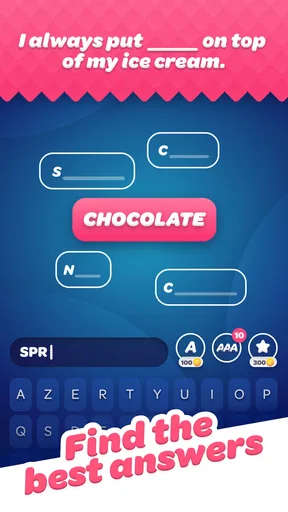
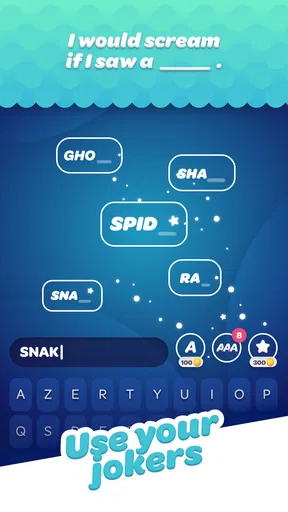
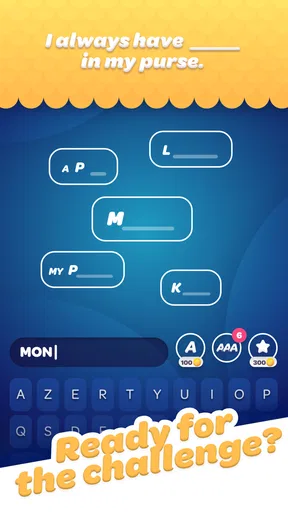

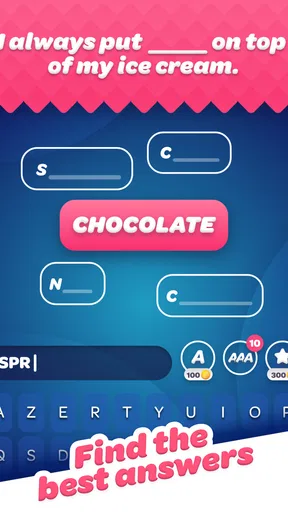
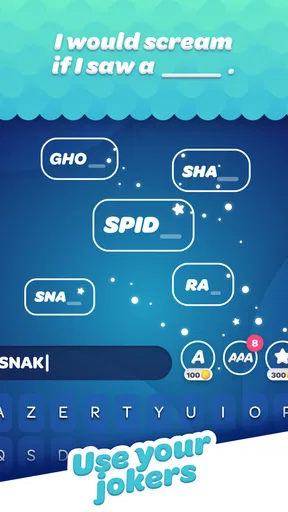
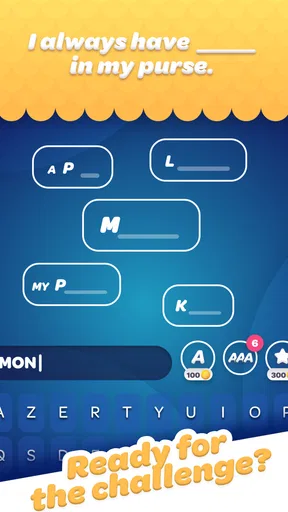
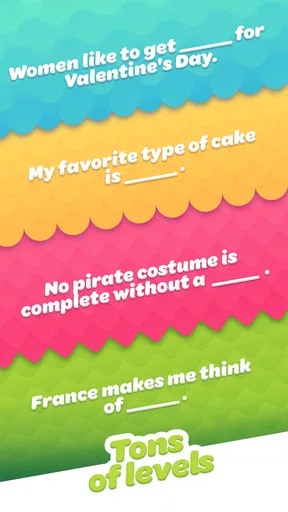
 Analysis by AppCompare
I’d choose People Say - Family Game when the goal is to get people talking rather than to test specialist knowledge. It is a trivia game built around predicting the answers other people are likely to give, so the fun comes from comparing instincts as much as getting a response right. I like that social angle: a confident guess can be funny, surprising, or instantly debatable, which gives a casual round more personality than a standard quiz.
The basic idea is easy to explain to someone who has never played: complete a phrase by naming a popular answer. That makes it a practical option for a mixed group, including relatives who do not usually play mobile games. The main question is whether your group enjoys guessing what “most people” might say. If you prefer questions with a single factual answer, a conventional knowledge quiz will probably suit you better.
Getting Started with People Say
So, jumping right into People Say - Family Game was as easy as pie. The interface is super user-friendly, which means you won’t have to spend ages trying to figure out where everything is. As soon as you fire up the app, you’re greeted with a bright and cheerful design that sets the mood for some family fun.
The game’s concept is pretty straightforward. You’re given a phrase with a missing word, and your job is to guess the most popular response. It’s kind of like playing a survey game where you try to think like the average person. You know, kind of like trying to guess what most people would say in a given situation. This makes it not just about what you think, but about understanding general perceptions.
How to Decide Whether It Fits Your Group
The strongest reason to try this trivia game is that it does not require players to arrive with the same knowledge or interests. A family member who follows sport closely and someone who prefers films can both make a guess without needing an advantage in a particular subject. That makes it easier to include people who might sit out a specialist quiz, although it does not guarantee that every prompt will land equally well with every age or personality.
I’d use it when there is a short stretch of shared downtime: after dinner, while waiting for everyone to arrive, or during a relaxed visit when nobody wants to commit to a long board game. A useful way to introduce it is to play a few turns casually before keeping score. That lets newcomers understand the unusual objective—matching a popular response rather than giving the answer they personally prefer—without making their first guess feel like a test.
It is also worth thinking about the group’s mood. People Say works best when players are comfortable explaining an unexpected answer and laughing about different interpretations. If someone dislikes being put on the spot, invite them to guess together with another person or simply join the discussion. The social pleasure is in the disagreement and reasoning, not in making every participant compete at full intensity.
Worth Reading Before You Choose

EA SPORTS FC Mobile 26 Is a Bigger Football Game, but It Takes Time

Flipboard Shows What News Apps Must Do Beyond the Feed

Switching to Android Auto Means Rethinking Your Driving Routine

Google Calendar Makes a Crowded Week Easier to Manage

Ludo King Makes the Most of the Minutes Between Plans

Baby Panda World Brings Quick Play to Modern Phones, but Its Game Library Feels Busy
Gameplay and Features
What I love about this game is that it doesn’t just throw you into the deep end. It starts off easy, gradually ramping up the difficulty as you progress. This way, even younger kids or those who aren’t die-hard gamers can enjoy it without feeling overwhelmed.
Each round challenges you to fill in the blanks with the most common answers. The more popular your answer, the more points you score. And trust me, it’s highly satisfying to get that top answer! Plus, there's a leaderboard, so you can see how you stack up against other players, adding a nice competitive edge.
My practical tip is to treat a prompt as a small prediction exercise: pause before answering and ask what a broad group of people might say, rather than choosing the first response that feels personally meaningful. That shift is the game’s central skill, and it can turn a near miss into an interesting conversation about why one answer seems obvious to one player but not to another. If your group starts debating every result, agree in advance to keep the discussion playful and move on when a round has run its course.
The point system and leaderboard add a reason to pay attention, but they also change the feel of a session. Players who enjoy tracking who is ahead may find that motivating; people who mainly want a low-pressure family activity can ignore the competitive mood and focus on the guesses. I would not make the leaderboard the whole event. The game is more appealing when a surprising answer sparks a story or a quick argument than when everyone treats each turn as a high-stakes contest.
Where Other Trivia Games May Fit Better
Compared with a general-knowledge quiz, this is less about recalling dates, names, or facts and more about anticipating common responses. That makes it a better fit for a mixed-age gathering where a knowledge gap could leave some players behind. On the other hand, players who like learning factual answers or measuring what they know may find a traditional quiz more satisfying, because this game rewards social intuition instead of expertise.
It also occupies a different niche from word puzzles played alone. A solo word game is often a better choice when you want a quiet challenge at your own pace; this one gains much of its character when people can react to one another’s choices. For a group that is together in person, taking turns and discussing answers can be the attraction. If you are looking for a deeply strategic game with complex rules or a sustained story, a simple popular-answer format is unlikely to provide that kind of depth.
That distinction helps set expectations before installing it. The premise is quick to grasp, but the enjoyment depends on whether you like the social question behind each prompt. A player can give a sensible answer and still miss the most popular one, which is not a flaw in the same way as getting a factual question wrong; it is the point of the challenge. If that uncertainty sounds entertaining, this format has a clear appeal. If it sounds arbitrary, another trivia style may be a better match.
The Social Element
Another layer of fun comes from the game’s social elements. You can connect with friends, share your scores, and even challenge each other. It’s a great way to stay connected with loved ones, especially when you can’t be in the same room.
There’s also an option to earn rewards as you play. This could be unlocking new levels or themes to keep the game fresh and exciting. It’s these little extras that make People Say - Family Game stand out from other similar apps.
For a remote catch-up, I would keep the setup simple: have everyone agree on the order of turns and say their guesses aloud, then use the app to keep the activity moving. The game’s social layer can give friends a shared subject even when they are not sitting together, but it should not be mistaken for a full-featured party platform. Its role is to provide a prompt and a reason to compare responses, so it suits a short, informal call better than a group that wants elaborate online coordination.
One trade-off with score sharing and challenges is that they can make a casual pastime feel more like a competition. That is useful when friends enjoy trying to beat one another, but not essential for a family session. I’d decide what kind of evening you want before leaning into scores: use them to add a little structure, or let them fade into the background if conversation matters more than winning.
Who Is Likely to Enjoy It?
I’d recommend it to families and friend groups that want a light activity they can explain quickly, especially when participants have different interests or levels of gaming experience. It may also suit someone who enjoys party-style questions but wants a phone-based option that can fill a spare few minutes. The Everyone content rating makes the age category broad, but younger players may still appreciate help reading a prompt or thinking through what a popular answer could be.
I would skip it if your priority is a private, uninterrupted solo puzzle, a deep strategy challenge, or a quiz that teaches and tests concrete facts. It is also not the best choice for a group that dislikes subjective answers or quickly gets frustrated when a reasonable guess does not score as hoped. Knowing that before you start prevents the common mismatch of expecting a conventional right-or-wrong test from a game about likely responses.
Perfect for All Ages
What makes this game a fantastic choice for families is its broad appeal. The questions and phrases are designed to be inclusive, meaning everyone from your little cousin to grandma can join in on the fun. It’s rare to find a game that genuinely appeals to such a wide age range without anyone feeling left out.
Plus, it’s a great way to spark conversations. You’d be surprised at the stories and laughs that emerge when someone shares why they thought their answer was the most common. It’s these moments that make family game nights memorable.
A realistic use is a family gathering where some people arrive late or leave early. Because the idea is simple to pick up, a newcomer can join without needing a long explanation of a campaign or a complex set of rules. I’d still avoid presenting it as a guaranteed activity for every relative: the best results come when people are willing to offer a guess, hear other interpretations, and let the group’s sense of humor guide the conversation.
For parents or hosts, the broad age category is reassuring, but it is still sensible to read prompts as they appear and use judgment about the group. The Everyone rating indicates the game’s general content classification; it does not mean every question will be equally familiar or engaging to every child. If a prompt does not connect with a younger player, let another person model how to think about the likely response rather than turning the moment into a lesson.
Price, Versions, and the Cost of Switching
The game is free to install, while in-app purchases range from $0.99 to $99.99 per item. I’d start with the free experience and decide whether the core guessing loop holds everyone’s attention before considering any optional spending. That is especially sensible for a game you may use only at occasional gatherings. If you are comparing it with a paid quiz or a physical party game, think about how often your group will actually return to it, rather than assuming that a free download has no possible costs inside the app.
The game was released on May 16, 2022, and its current version is 3.0.0; it requires Android 7.0 or later. It is developed by SAS ELIA. Those details are useful when checking whether an older Android device can run it, but the bigger decision is whether your group likes this particular style of play. Switching from a familiar quiz is easy in the sense that the premise takes little explanation, yet it may take a round or two for players to stop searching for a factual answer and start predicting a popular one.
On the store, it has a 4.7 average from around 33,000 ratings, with more than 1 million installs. That offers a sense of broad interest, but ratings cannot tell me whether a specific family will enjoy the prompts or the social style. I would treat the numbers as context, not a substitute for trying a short session with the people who will actually play.
Final Thoughts
All in all, People Say - Family Game is a delightful addition to any family’s collection of games. It’s engaging, easy to pick up, and most importantly, it brings people together. Whether you’re looking to kill time, entertain the kids, or find a new tradition for family game night, this app ticks all the right boxes.
So, if you haven’t already, give it a try. You might just find that it becomes a staple in your family’s entertainment arsenal. Trust me, you won’t regret it!
My recommendation is to try it with a small, relaxed group first, especially if your usual trivia games rely on specialist knowledge. The most useful test is not whether everyone wins; it is whether the prompts lead to guesses, reactions, and a bit of friendly debate. If they do, this is a handy choice for casual family time. If your group wants measurable expertise, richer strategy, or a solo challenge, choose a different kind of game and keep this one for the occasional social round.
Pros
- Engaging trivia questions for all ages
- User-friendly interface and easy navigation
- Multiplayer mode enhances family fun
- Regular updates with new questions
- Offline mode available for travel play
Cons
- Limited question categories can get repetitive
- Ads can interrupt gameplay frequently
- In-app purchases for extra features
- No option for custom question sets
- Requires internet for initial setup
FAQs for People Say - Family Game
What is People Say - Family Game and how does it work?
People Say - Family Game is a fun and engaging trivia game designed for families and friends. The game involves answering survey-based questions to guess the most popular responses. Players take turns and compete to see who can come up with the most common answers, making it a great choice for social gatherings and family nights.
Is People Say - Family Game suitable for children?
Yes, People Say - Family Game is suitable for children and is designed to be family-friendly. The questions are appropriate for all ages, making it a great way for families to bond while testing their knowledge. However, parental guidance is recommended to ensure the content aligns with your family's values.
Does People Say - Family Game require an internet connection?
People Say - Family Game can be played offline, making it convenient for playing anywhere, whether at home or on the go. However, an internet connection might be required for downloading new question packs or updates, so it's advisable to connect to Wi-Fi occasionally to access the latest content.
Can multiple players participate in People Say - Family Game?
Absolutely! People Say - Family Game is designed to accommodate multiple players, making it perfect for group play. Players can take turns answering questions, or you can form teams to add a competitive edge. The game is flexible and can be adapted to suit different group sizes.
Are there in-app purchases in People Say - Family Game?
Yes, People Say - Family Game may offer in-app purchases. These could include additional question packs, themes, or other enhancements to enrich the gaming experience. While the base game is enjoyable, these optional purchases can provide more variety and replayability. Always check purchase options if children are playing.


